How Virtual Betting Works

Want expert predictions delivered daily?
Get free tips on Telegram or upgrade to Premium.
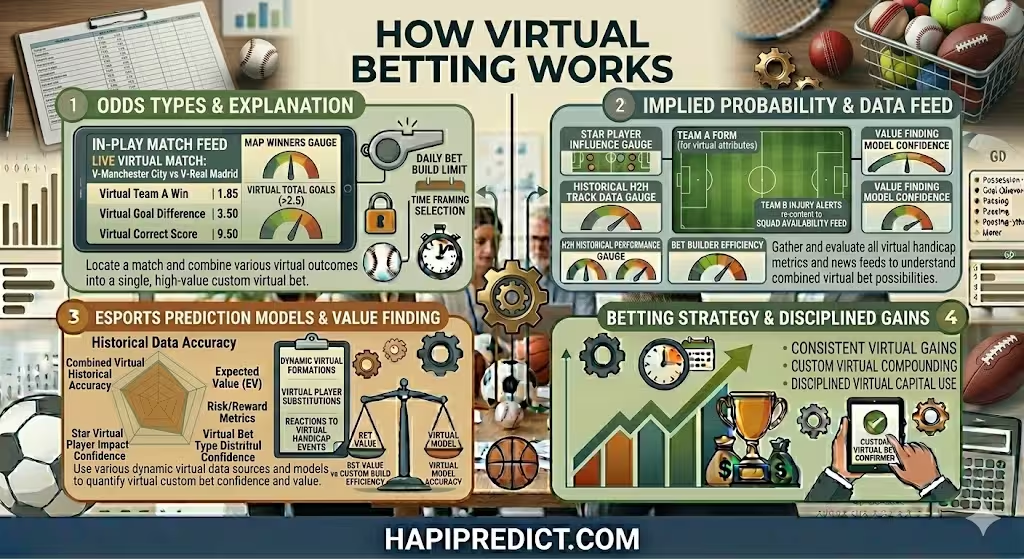
Virtual betting is betting on computer-generated sports events instead of real matches. The results are created by software using a random number system, so there are no real teams, real players, injuries, form, tactics, or live match performance to analyze.
Virtual betting can look like football, horse racing, dog racing, basketball, or other sports, but it is not the same as betting on real sports. The events are fast, frequent, and unpredictable, which can make them risky when people keep staking repeatedly without taking a break.
What Is Virtual Betting?
Virtual betting is a type of betting where the event is simulated by computer software. Instead of a real football match or horse race, the betting site shows a virtual event with animated teams, horses, dogs, cars, or players.
The event may look like a real sports broadcast, but the result is not decided by real athletes. It is generated by the betting platform’s virtual sports system. The names, graphics, rankings, odds, and animations are part of the game display.
For example, a virtual football match may show two fictional teams playing a short simulated game. You may see markets such as home win, draw, away win, over goals, correct score, or both teams to score. The result appears within minutes.
The key thing to understand is that virtual betting is not based on real sports analysis. You cannot study real injuries, recent form, team news, weather, motivation, or head-to-head records in the same way you would for actual sports.
How Does Virtual Betting Work?
Virtual betting works by letting users place bets on simulated events before the software generates the result. The event runs for a short period, then the system settles the bet based on the outcome shown.
The process usually looks like this:
A virtual event is listed on the betting platform.
The site shows available markets and odds.
The bettor selects an outcome and enters a stake.
The virtual event starts after a countdown.
The software displays the simulated result.
The bet is settled as won, lost, void, or refunded depending on the rules.
Virtual events are usually very short. Some may run every few minutes, which is one reason they can become risky. A person can place many bets in a short time without realizing how much money has been used.
The result is not controlled by the bettor. It is decided by the virtual betting system. This means virtual betting should never be treated as a skill-based way to predict real sports outcomes.
How Are Virtual Betting Results Decided?
Virtual betting results are usually decided by a random number generator or similar computer-based system. The animation you see is a visual display of the result, not a real match being played by real people.
A random number generator is designed to produce outcomes within the rules of the virtual game. The betting site then displays the result through graphics, commentary, scorelines, race finishes, or event highlights.
For example, in virtual horse racing, the system may decide which horse wins, places, or finishes behind. The animated race then shows that outcome as if it is happening live. In virtual football, the system may decide the final score and show a short match animation.
This is why virtual betting is different from real sports betting. In real sports, many human and physical factors can affect the result. In virtual betting, the outcome comes from software. The graphics may look realistic, but they do not create real match logic.
Is Virtual Betting The Same As Real Sports Betting?
Virtual betting is not the same as real sports betting. Real sports betting is based on actual matches, teams, players, form, injuries, weather, tactics, and live performance. Virtual betting is based on simulated events created by software.
In real football betting, you may analyze team form, home advantage, player injuries, fixture congestion, and tactical style. In virtual football betting, those real-life factors do not exist. The team names and records shown on the platform may only be part of the virtual game design.
This difference matters because some people wrongly treat virtual sports like real sports. They may believe a virtual team is “in form” or that a virtual horse has a strong racing pattern. But the system is not the same as watching real athletes perform.
Virtual betting should be understood as a game of chance. The result is not something you can control or predict with reliable sports analysis.
What Are The Most Common Virtual Betting Markets?
Common virtual betting markets include match winner, correct score, over and under, both teams to score, race winner, place betting, forecast, handicap, and total points. The available markets depend on the virtual sport.
Virtual football markets may include:
Home win
Draw
Away win
Double chance
Over and under goals
Both teams to score
Correct score
First team to score
Half-time or full-time result
Virtual racing markets may include:
Race winner
Each-way
Place betting
Forecast
Tricast
Straight forecast
Reverse forecast
Virtual basketball or tennis markets may include match winner, handicap, total points, total games, or correct score. Even when the markets look like real sports markets, the outcome is still generated by software.
Before placing any virtual bet, read the market rules carefully. Some virtual markets settle differently from the real sports markets they resemble.
How Do Virtual Football Bets Work?
Virtual football betting works by allowing you to bet on a simulated football match. The event may show fictional teams, a short countdown, odds, and markets similar to real football betting.
For example, a virtual football match may offer home win, draw, away win, over 2.5 goals, both teams to score, and correct score. If you bet on over 2.5 goals, the simulated match must finish with at least 3 goals for the bet to win.
The match may last only a few minutes. After the result appears, the betting site settles the bet. If the score is 2-1, over 2.5 goals wins. If the score is 1-1, over 2.5 goals loses.
Although the market looks familiar, it is not based on real football. There are no real injuries, substitutions, referee decisions, weather conditions, or tactical changes. The result is created by the virtual system.
How Do Virtual Horse Racing Bets Work?
Virtual horse racing betting works by letting you bet on simulated horse races. The race shows animated horses, runners, odds, and a finish order generated by the virtual racing system.
Common virtual horse racing markets include winner, place, each-way, forecast, and tricast. A win bet needs your selected horse to finish first. A place bet needs the horse to finish within the qualifying place positions. A forecast requires you to predict first and second, while a tricast requires the first three in order.
For example, if you choose Horse 4 to win and it finishes first, the bet wins. If it finishes second, a normal win bet loses unless you chose place or each-way and the terms allow it.
Virtual horse racing can feel fast and exciting because races happen often. This speed can lead to repeated betting. It is important to use limits and avoid chasing losses from one race to the next.
How Do Virtual Dog Racing Bets Work?
Virtual dog racing betting works like virtual horse racing, but the event uses animated dogs instead of horses. Bettors choose outcomes such as race winner, place, forecast, or tricast.
A simple win bet means your selected dog must finish first. A forecast means you must predict the first two finishers, usually in the correct order unless the market says reverse forecast. A tricast means predicting the first three finishers in the correct order.
Virtual dog races are usually short and frequent. This makes them easy to follow, but also risky because there may be another race almost immediately after one ends.
The main thing to remember is that the race is simulated. The dogs are not real animals competing live. The finish order is produced by software, and the animation displays the result.
How Do Odds Work In Virtual Betting?
Odds in virtual betting show the possible return if your selection wins. Lower odds usually mean the outcome is priced as more likely, while higher odds usually mean the outcome is priced as less likely.
For decimal odds, the calculation is simple:
Stake × Odds = Total Return
For example, if you stake ₦1,000 on a virtual football selection at odds of 3.00 and it wins, the total return is ₦3,000. That includes your ₦1,000 stake and ₦2,000 profit.
However, odds do not guarantee anything. A short-priced virtual selection can lose, and a long-priced outcome can win. The odds are part of the virtual betting market, but the result still comes from the software system.
Do not choose a virtual bet only because the odds look attractive. A high possible return usually means the outcome is harder to land.
Why Do Virtual Betting Events Happen So Fast?
Virtual betting events happen fast because they are computer-generated and do not need real teams, stadiums, weather, referees, or live match schedules. The platform can run events every few minutes.
This speed is one of the biggest differences between virtual betting and real sports betting. A real football match takes around 90 minutes plus added time. A virtual football match may settle within minutes. A real horse race depends on race schedules. A virtual race can restart quickly after the last one ends.
Fast events can increase risk because a person may keep betting without enough time to pause. One loss can quickly lead to another bet. That can create a chasing pattern where the bettor tries to recover money from the next event.
Virtual betting should be treated with extra caution because the short cycle can make losses add up quickly.
Can You Predict Virtual Betting Results?
You cannot reliably predict virtual betting results the way you might analyze real sports. Virtual betting outcomes are generated by software, so real-world analysis does not control the result.
Some platforms may show virtual form, odds history, team ratings, or race cards. These details can make the event feel like real sports analysis. However, they do not give the same kind of information as real team form, injuries, weather, tactics, or player performance.
For example, a virtual horse may appear to have a strong profile, but that does not mean it will win the next race. A virtual football team may look strong on the screen, but there is no real training, fatigue, or tactical advantage behind it.
The safest mindset is simple. Virtual betting is chance-based. Any claim that it can be predicted with certainty should be avoided.
Is Virtual Betting Random?
Virtual betting is generally based on random or computer-generated outcomes within the rules of the game. The result is not created by real sports performance.
This does not mean every platform explains its system in the same way. Some virtual games may use probability models, programmed outcomes, or certified random number systems. But for the bettor, the important point remains the same. You are not betting on real athletes or live competition.
Randomness makes virtual betting risky because you cannot rely on normal sports research. You may win one event and lose the next with no real pattern to follow.
Some people look for patterns in virtual results, but short-term patterns can be misleading. Seeing one result happen several times does not mean the next result is predictable. Treating random events like predictable trends can lead to poor decisions.
Why Is Virtual Betting Risky?
Virtual betting is risky because events happen quickly, results are unpredictable, and repeated betting can make losses build up fast. The speed of virtual betting can make it easier to lose track of time and money.
Unlike real sports, virtual events do not give you long breaks between matches. There may be another race, match, or game available almost immediately. This can make it tempting to keep staking after a loss.
Virtual betting also has limited analysis value. You cannot check real team news, player injuries, weather, motivation, tactics, or recent real performance. This makes it harder to make an informed decision.
The biggest risk is behavioral. A person may keep clicking because the next event is close. If they lose, they may try another. If they win, they may continue because they feel confident. Both reactions can lead to overspending.
What Is The Difference Between Virtual Betting And Casino Games?
Virtual betting and casino games are different in appearance, but both can involve computer-generated outcomes. Virtual betting looks like sports, while casino games usually look like cards, reels, dice, or table games.
The difference is mostly presentation and market style. Virtual betting uses sports-style markets such as match winner, over and under, correct score, race winner, or place betting. Casino games may use spins, hands, numbers, or dealer outcomes.
However, the risk can be similar because both can produce fast results and repeated staking. A virtual football match may feel like sports betting, but the event is still simulated by software.
This is why responsible limits matter. Do not assume virtual betting is safer because it looks like football, racing, or basketball. The speed and randomness can make it risky.
What Happens If A Virtual Bet Wins Or Loses?
If a virtual bet wins, the betting site adds the payout to your account based on the odds and stake. If it loses, the stake is usually lost.
For example, if you stake ₦500 on a virtual football correct score at odds of 8.00 and the score is correct, your total return is ₦4,000. If the score is different, the bet loses.
Virtual bets usually settle quickly because the event is short and the result is generated immediately after the simulation. You can often see the result in your bet history within a short time.
If a technical issue affects settlement, the platform’s rules decide whether the bet stands, is voided, or is refunded. Always check virtual betting terms before placing a bet.
How Do Virtual Betting Slips Work?
Virtual betting slips work like normal betting slips. They show your selected event, market, odds, stake, possible return, and bet status after the result.
Before confirming a virtual bet, check the slip carefully. Because virtual events run quickly, it is easy to rush and select the wrong market or stake. Do not place a bet only because the countdown is ending.
A virtual betting slip may show:
Virtual sport
Event name
Selection
Market
Odds
Stake
Possible return
Event time
Bet status
The possible return is not guaranteed money. It only shows what may be paid if the selection wins. If the bet loses, the stake is gone unless the market is voided or refunded.
Why Do People Lose Money In Virtual Betting?
People lose money in virtual betting because the outcomes are unpredictable, events happen quickly, and repeated staking can build losses faster than expected. Chasing losses is one of the biggest dangers.
A person may start with a small stake on one virtual race. If it loses, they may try the next race. If that loses too, they may increase the stake to recover. Because the next event starts quickly, there may be little time to calm down.
Virtual betting can also create false confidence. A person may win a few events and believe they have found a pattern. But random or computer-generated outcomes do not become guaranteed because of recent results.
The safest approach is to set limits before playing and stop when the limit is reached. Do not keep betting because another event is about to start.
What Are Common Virtual Betting Mistakes?
Common virtual betting mistakes include treating simulated events like real sports, chasing losses, staking too often, trusting fake patterns, and betting without checking the market rules.
Virtual betting can look simple, but the speed can make poor habits worse. Because events happen quickly, a person may place many bets without thinking deeply about each one.
Common mistakes include:
Believing virtual results can be predicted with certainty
Betting repeatedly after losses
Increasing stakes to recover money
Ignoring deposit and loss limits
Betting because the next event starts soon
Choosing high odds only for big returns
Misreading virtual race markets
Treating virtual form like real sports form
Betting while bored or stressed
Avoiding these mistakes requires discipline. If you feel rushed, emotional, or desperate to recover money, stop.
How Can You Use Virtual Betting Responsibly?
You can use virtual betting responsibly by setting strict limits, using small stakes, taking breaks, and accepting that the result is computer-generated and unpredictable. It should never be treated as a way to make guaranteed money.
Responsible virtual betting habits include:
Set a fixed budget before starting.
Use only money you can afford to lose.
Keep stakes small.
Avoid chasing losses.
Take breaks between events.
Do not increase stakes after losing.
Stop when your budget is finished.
Use deposit limits and loss limits.
Avoid betting when bored, angry, or stressed.
Do not look for patterns in random results.
Never use money meant for food, rent, school fees, savings, debt, transport, business, or family needs. If losing the stake would create stress, the bet should not be placed.
When Should You Avoid Virtual Betting?
You should avoid virtual betting when you are chasing losses, feeling emotional, betting too often, or using money you cannot afford to lose. You should also avoid it if you struggle to stop after one event.
Virtual betting is especially risky for people who are tempted by fast results. If you find yourself saying “one more race” or “one more match” repeatedly, that is a warning sign.
Avoid virtual betting if:
You are trying to recover a loss
You feel bored and want quick excitement
You are increasing stakes after losing
You are using important money
You cannot stop after reaching your limit
You feel angry after a result
You believe you have found a guaranteed pattern
Betting affects your mood or daily life
The safest decision is sometimes not to bet at all. A missed virtual event is not a loss.
? Frequently Asked Questions
What Does Virtual Betting Mean? ⌄
Is Virtual Betting Real Sport? ⌄
How Are Virtual Betting Results Decided? ⌄
Can You Predict Virtual Betting Results? ⌄
Is Virtual Betting Risky? ⌄
What Is The Safest Way To Approach Virtual Betting? ⌄
Related Articles
📬 Free Daily Predictions
Get expert picks delivered to your inbox every morning.